Critical Power Guides for Facility Managers and Engineers
Practical guidance on UPS systems, generators, batteries, power quality, and data-center infrastructure, written by the team that installs and maintains them. No theory for its own sake. These are the questions we get asked on site.

Modular UPS Systems: How to Scale Power Without Replacing Your UPS
How a modular UPS works, when it beats a standalone unit, and what to check before you buy: frame size, N+1 redundancy, hot-swap[…]

Lithium-ion UPS Batteries vs VRLA: What They Really Cost Over 10 Years
A lithium-ion UPS battery costs more upfront but often outlasts two or three VRLA sets. A 10-year cost view covering life, space, monitoring[…]
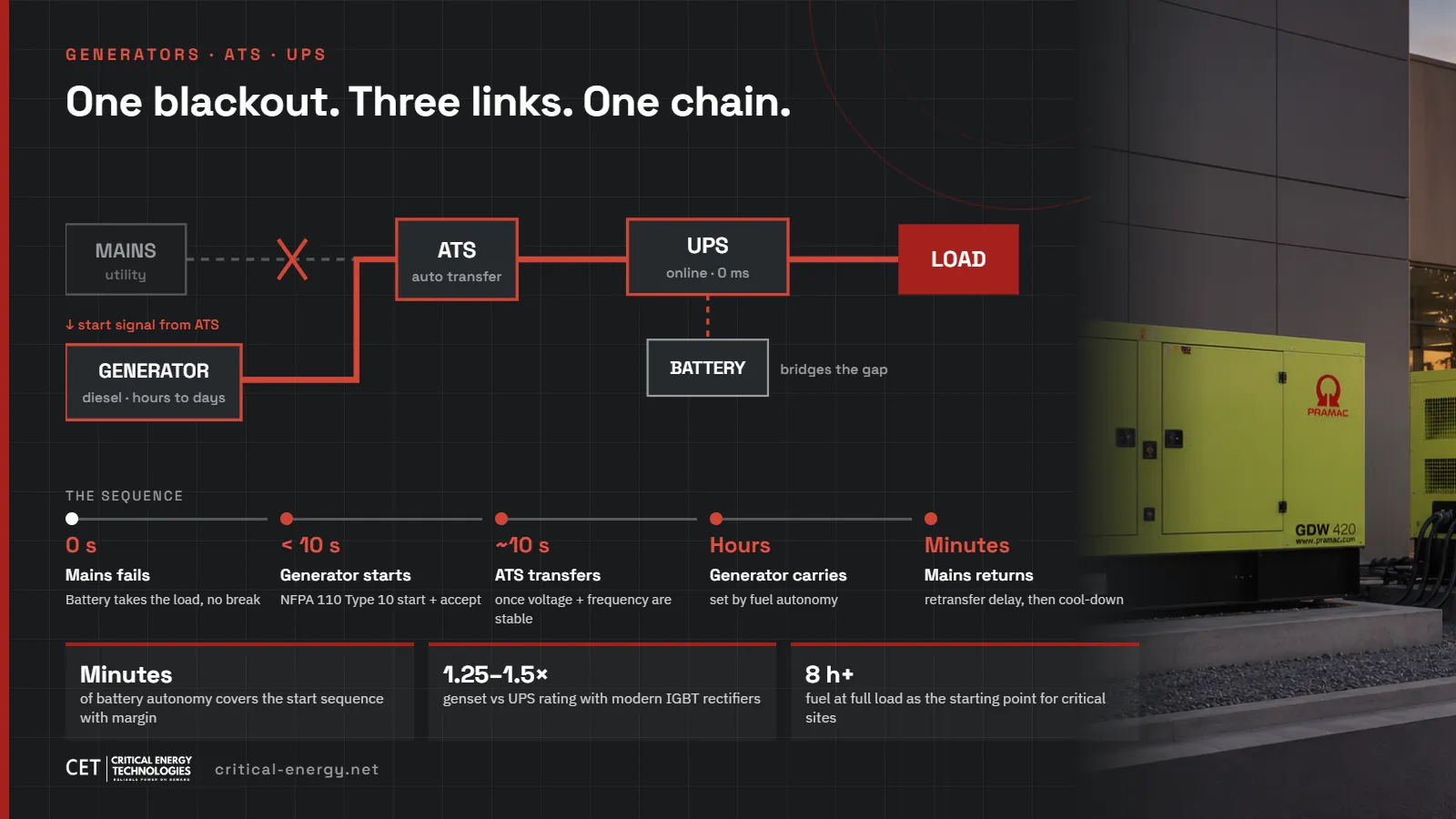
UPS, ATS and Generator: Engineering the Chain That Survives a Blackout
A blackout is a sequence, and the UPS, ATS and generator each cover a different part of it. How to engineer the three[…]

Li-ion vs VRLA vs NiCd: Choosing UPS Battery Chemistry Like an Engineer
Li-ion, VRLA or NiCd? The right UPS battery chemistry depends on room temperature, runtime, space and budget. Design life, cost and best fit
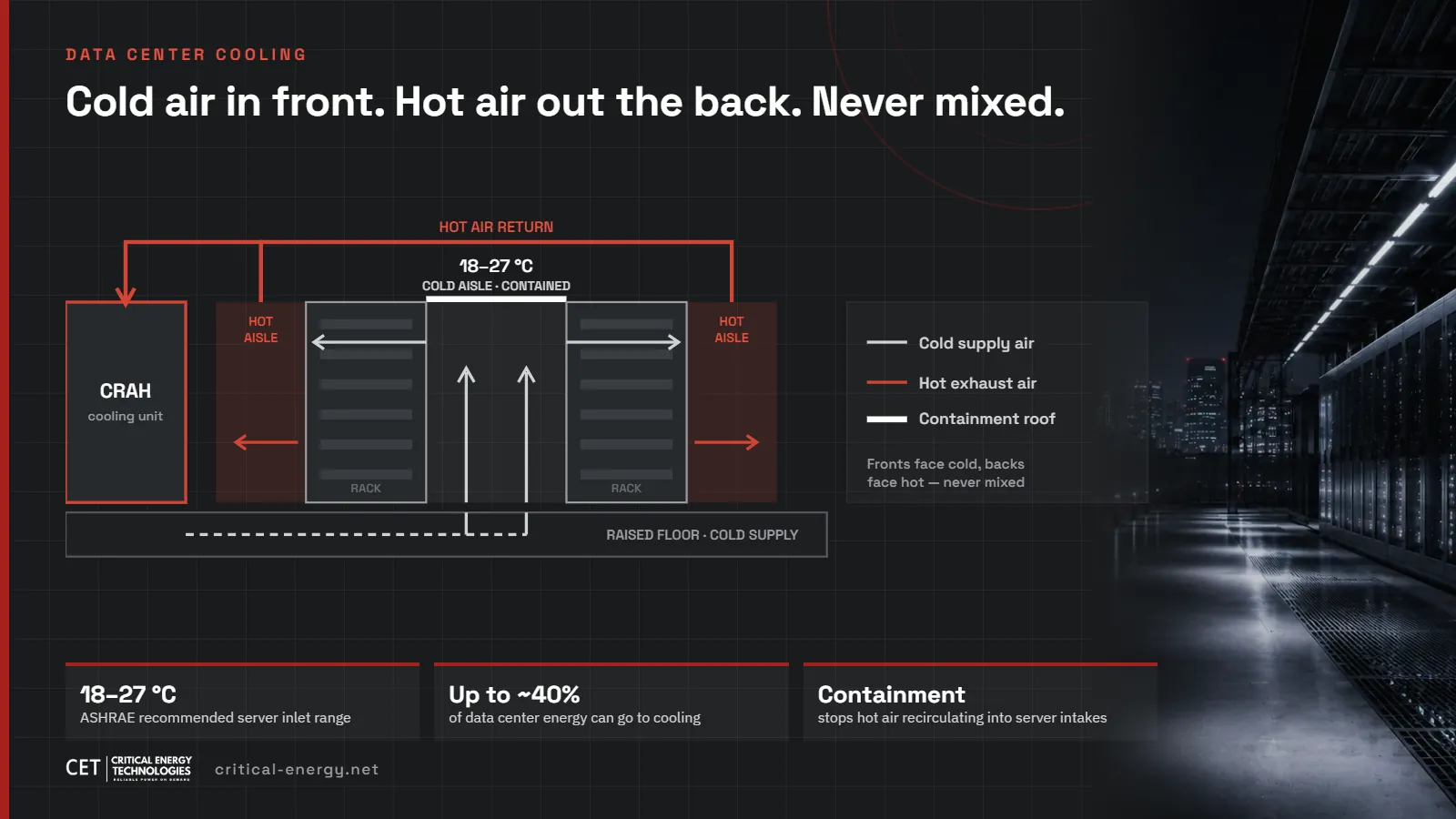
Cooling Is Critical Power: The Thermal Half of Data Center Reliability
Every kilowatt of IT power becomes a kilowatt of heat. Why precision cooling, airflow management and cooling redundancy belong in the critical power
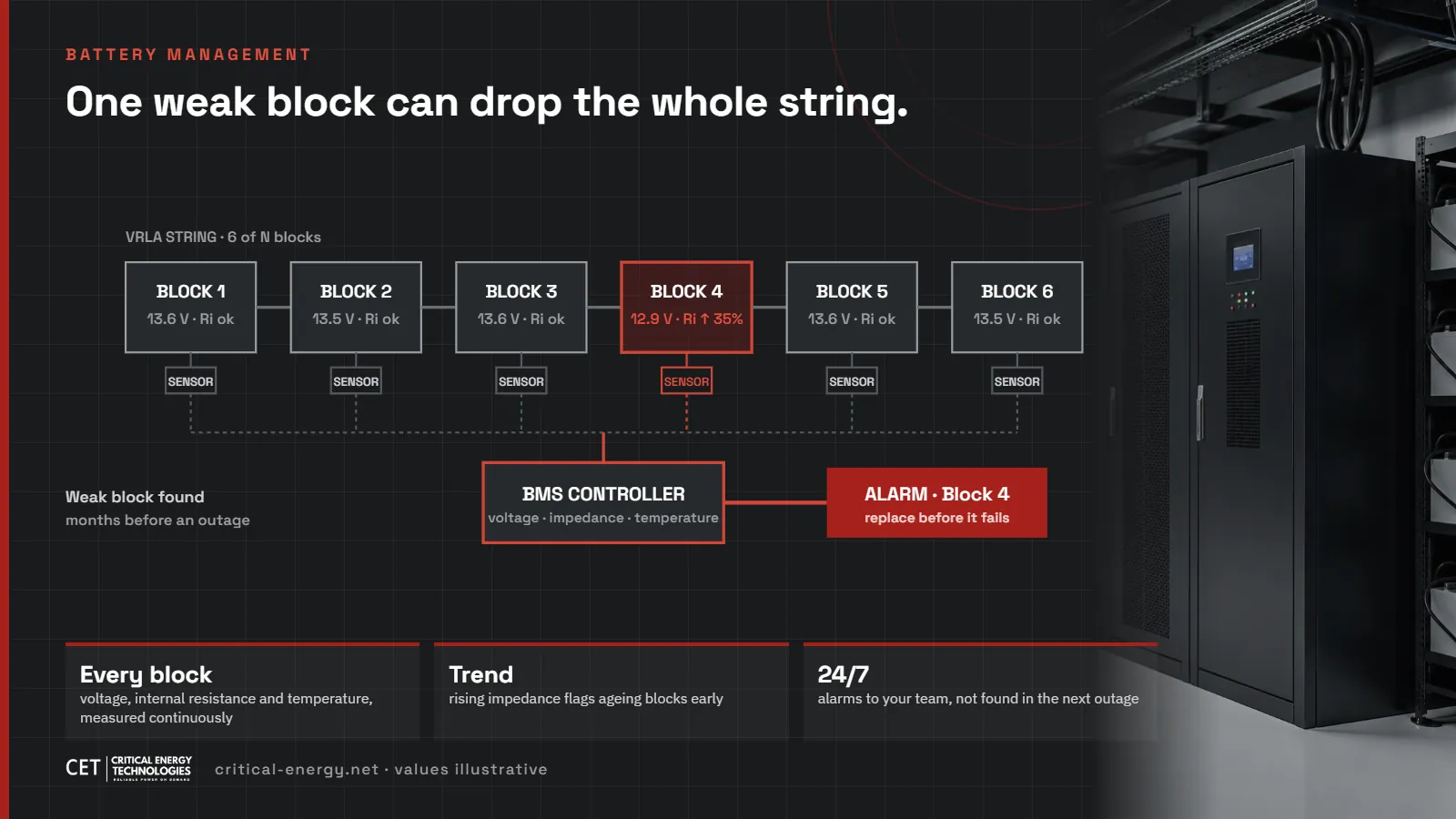
Battery Monitoring Systems: Finding the Weak Block Before It Finds You
One weak block can take down a whole UPS battery string while the panel still reads normal. How block-level battery monitoring catches it[…]

SNMP Cards: How a Silent UPS Becomes a Monitored Asset
A UPS SNMP card puts your UPS on the network with live alarms, graceful server shutdown and DCIM integration. What it does and[…]

110 VDC: The Invisible Power System Behind Substations, Telecom and Industry
Protection relays and breaker trip coils run on a 110 VDC battery and charger system. Why industrial chargers differ from commercial ones, and[…]

EPO, Automatic Bypass and Manual Bypass: The UPS Safety Layer Most Sites Discover Too Late
Automatic bypass, maintenance bypass and the EPO circuit decide how a UPS behaves on its worst day. What each one does, and five[…]
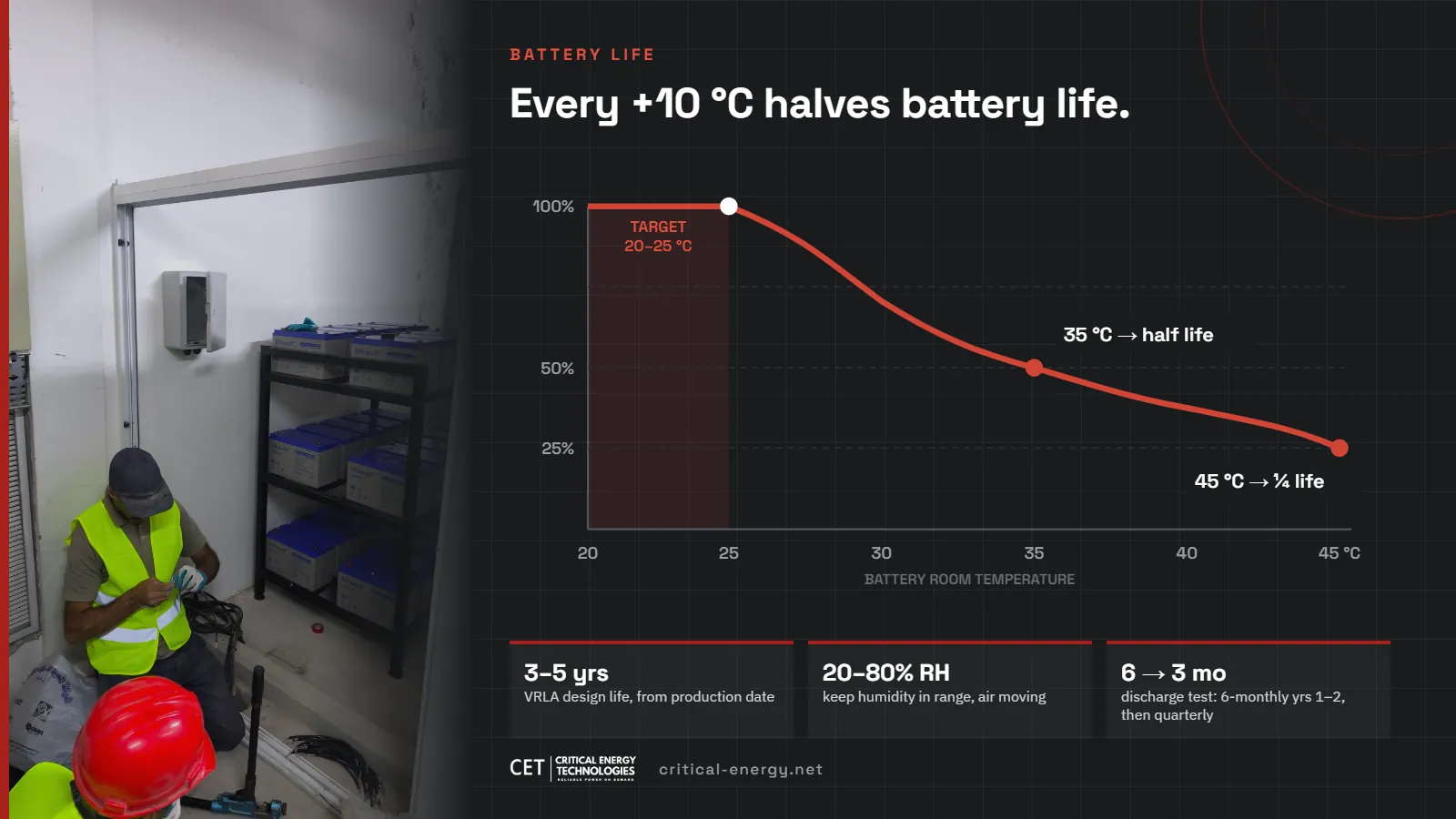
Why UPS Batteries Die Early, and the Habits That Double Their Life
Every 10°C above 25°C can halve UPS battery life. The temperature, load and testing habits that protect your battery investment.

kVA vs kW: Why Unity Power Factor Changed UPS Sizing
Modern UPS run at unity power factor (1.0), so kVA equals kW. Why that changed UPS sizing and how to compare quotes correctly.
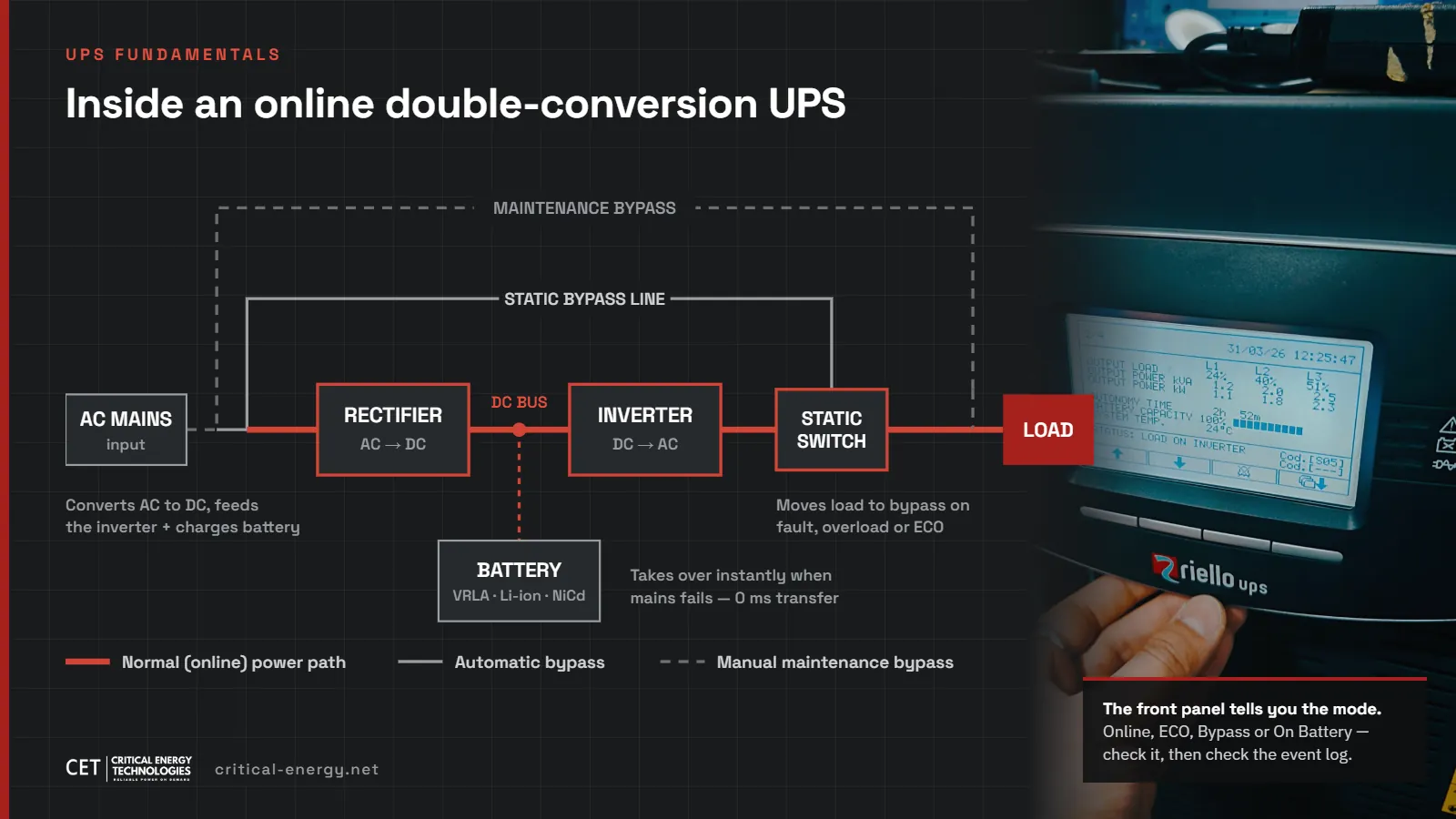
The Four Operation Modes of an Online UPS, and When Your Load Is Protected
The four UPS operation modes, and when each one earns its place Efficiency, protection, and the trade-off every critical-power decision comes down to.[…]