
Lithium-ion UPS Batteries vs VRLA: What They Really Cost Over 10 Years
A lithium-ion UPS battery costs more on the quotation, and that gap is why many buyers stop comparing too early. Over a full UPS life the picture often changes. This article compares lithium-ion (LFP) and VRLA batteries over ten years, using the cost items we see on real projects: replacements, labour, space, monitoring and safety.

Design life decides most of the cost
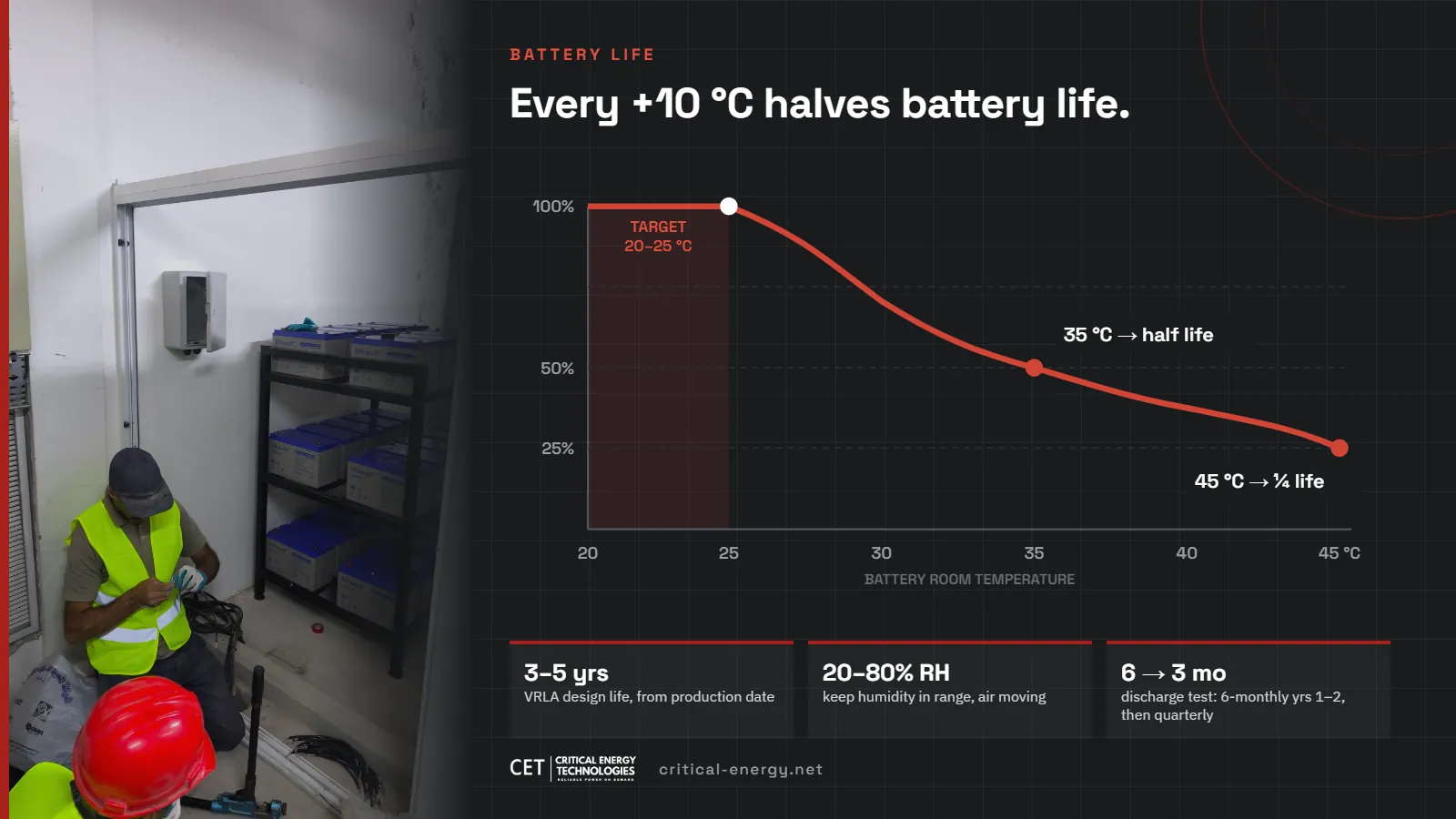
VRLA (sealed lead-acid) batteries in most UPS systems are rated for 3 to 5 years, and heat shortens that further. Lithium iron phosphate (LFP) batteries, the chemistry used in most lithium-ion UPS packs today, are commonly rated for 10 to 15 years. Check the datasheet for your model, because ratings depend on temperature and duty cycle. A UPS usually runs for 10 years or more, so a VRLA site often replaces its batteries two or three times during one UPS life. A lithium-ion site often replaces them once, or not at all.

Count every replacement, not only the battery
Each VRLA replacement includes the battery price, labour, disposal of the old set, a maintenance window, and a period when the load runs with less protection. Two or three replacements add up. Over ten years, the replacement line often outweighs the purchase price gap.
Space and floor load
For the same runtime, a lithium-ion cabinet is lighter and takes less floor space than a VRLA cabinet. The exact difference depends on the product and the runtime, so compare datasheets at your target runtime. The gap matters most in older buildings with floor-load limits, in rooms with no spare area, and in sites that will add load later without building a new battery room.
Temperature and monitoring
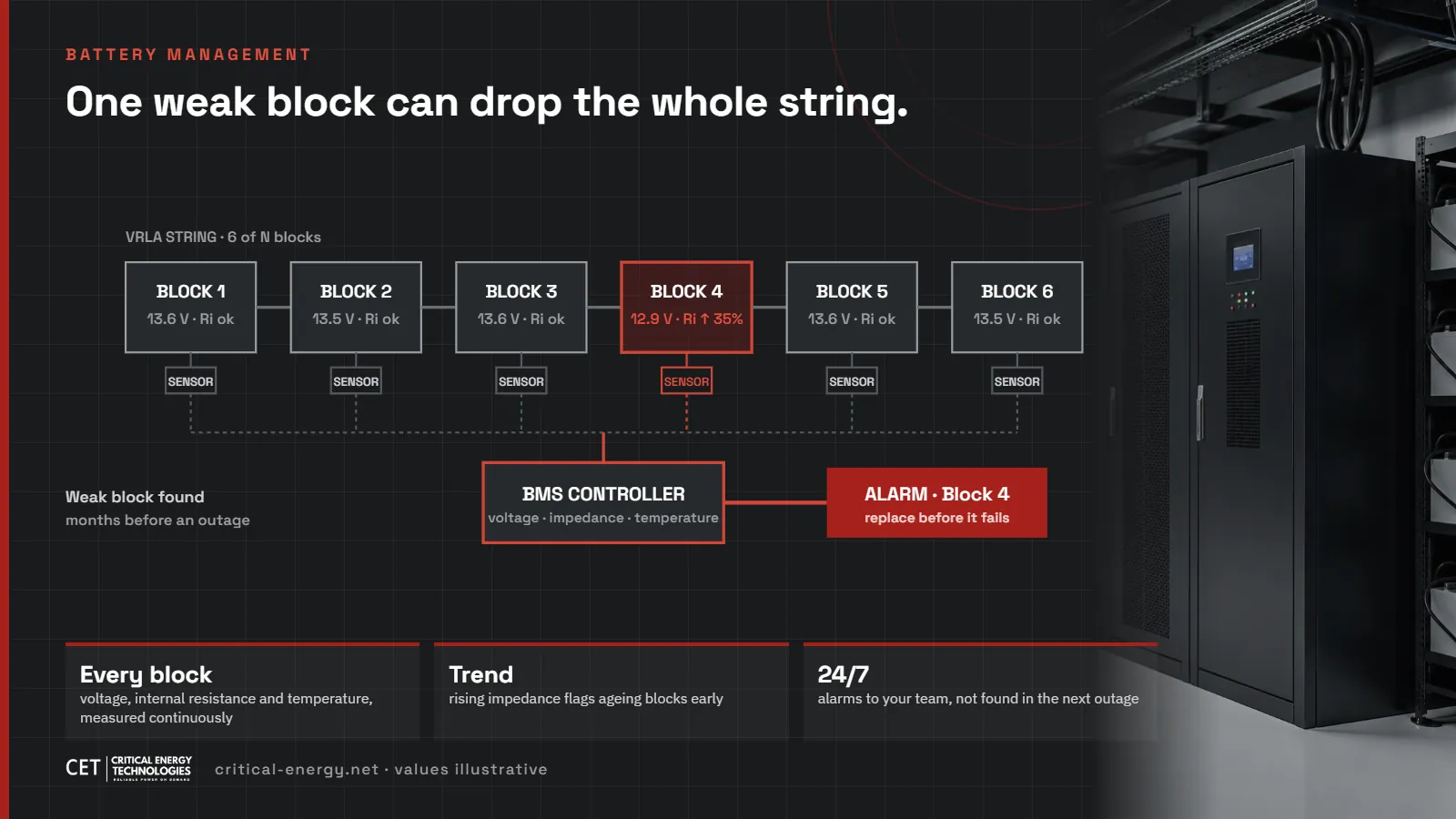
Lithium-ion tolerates higher temperatures than VRLA, but the battery room still needs proper cooling, because heat ages every battery. Each lithium-ion system includes a Battery Management System (BMS). The BMS tracks cell voltage, temperature and state of charge, and protects the pack when a reading leaves its safe range. VRLA monitoring is usually an optional extra, and many sites skip it. For more on how the BMS works, read our battery management system guide.
Safety and standards
Fire risk is the first question most clients ask. LFP is one of the more thermally stable lithium chemistries, which is why it dominates UPS applications. Before we recommend a lithium-ion battery, we check compliance with IEC 62619, the safety standard for industrial lithium batteries. We also ask the manufacturer for fire test data such as UL 9540A where it exists, and we confirm that the UPS and the battery are approved to work together. We do not pair a UPS from one brand with a battery cabinet from another unless both manufacturers approve the combination.
Lithium-ready systems
Lithium-ion UPS and battery systems we supply in Jordan
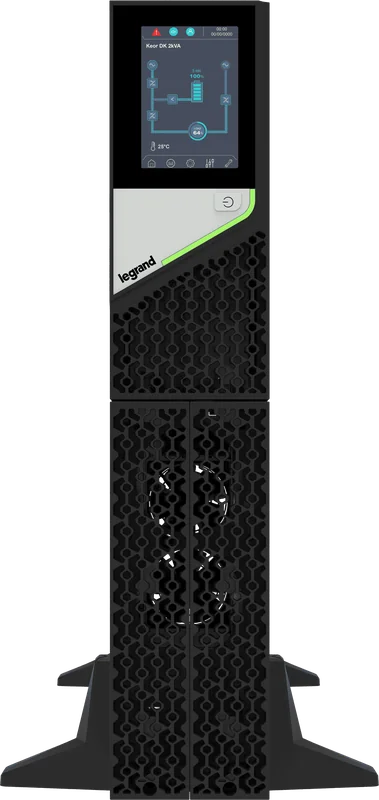 Tower

Legrand UPS Keor DK 1–10 kVA
- Online double conversion
- PF 1 (kVA = kW)
- VRLA or lithium-ready
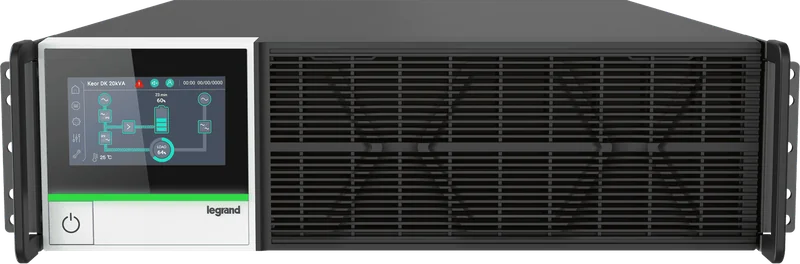 19″ rack
Legrand UPS Keor DK 10–20 kVA
- Up to 96% efficiency
- Parallel from 5 kVA
- Touch-screen display
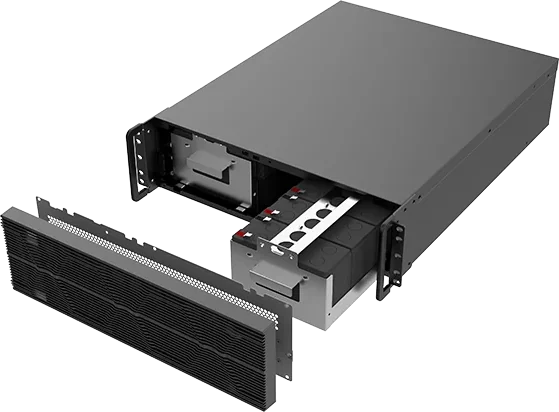 External cabinet
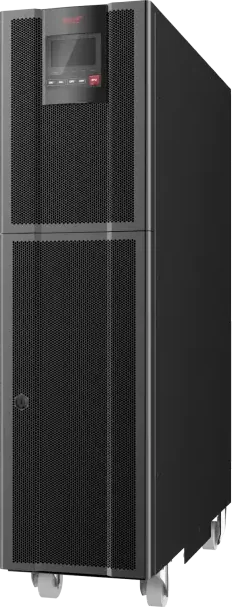 Built-in lithium

Kehua Tech Eon-Li Series 10–30 kVA
- About 14 min at 30 kW
- Up to 4 units in parallel
- ECO mode up to 98.5%
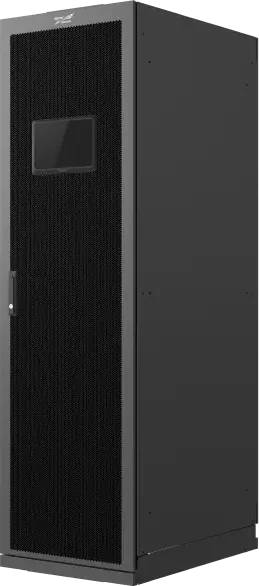 Battery cabinet
Kehua Tech S³ lithium-ion system
- 40, 50 or 100 Ah modules
- Three-layer BMS
- For Kehua UPS 6–1,200 kW
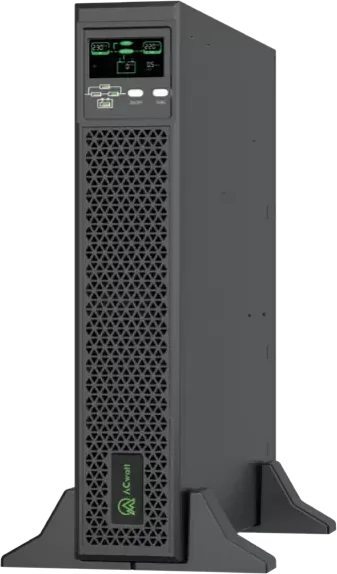 Online rack UPS

ACWATT ACS-Li Series 1–3 kVA
- Lithium series
- Rack or tower

Riello UPS lithium battery solutions
- BMS and battery modules with integrated control
- Real-time monitoring
- Battery breaker protection
When VRLA is still the right choice
Lithium-ion does not suit every site. For small single-phase units, short projects, or systems that will be replaced within a few years, VRLA is often the better choice. Upfront budget matters too. A VRLA system that is maintained properly outperforms a lithium-ion system that is not.
How we compare the two
We size both options for the same load and runtime, then show the client the ten-year cost side by side: purchase price, replacements, labour, maintenance, space and energy. Send us your UPS model, load and required runtime at info@critical-energy.net, and we will prepare the comparison for your site. You can also review our UPS and battery services. Related reading: Li-ion, VRLA and NiCd battery comparison.
Batteries in Jordan
UPS and industrial batteries we supply in Jordan
Critical Energy Technologies (CET) supplies batteries for UPS, telecom and DC systems across Jordan from EnerSys (USA), Saft (France), CSB, Ultracell, Ener Rocket, King Long and NPP, in capacities from 5 Ah to 6,000 Ah. That covers VRLA blocks for server rooms and branch UPS, lithium-ion systems for new builds, and nickel-cadmium strings for substations and hot, remote sites. Every battery ships as genuine stock with a traceable production date.
CET brings more than 10 years of hands-on experience in critical and emergency power supply to every project, from the first load survey to commissioning and maintenance. Call +962 77 564 7788, email info@critical-energy.net, or send us your load list for a sized quotation.
 USA
 France
 VRLA
 UK
- Ener RocketVRLA
- King LongVRLA
- NPPVRLA
Comments are closed