The High Cost of Cheap Power: Why You Can’t Bargain on Critical Infrastructure
The Illusion of Saving Money
In the world of electrical infrastructure, the most expensive system you will ever buy is a cheap one.
When budgets get tight, it is tempting to look at backup power—UPS units, diesel generators, and battery systems—as an area to cut costs. After all, it’s equipment that sits quietly in the background, waiting for an emergency that might only happen a few times a year.
But when that emergency strikes, the true value of your investment is tested instantly.
The Core Trinity: UPS, Generators, and Batteries
These three components act as the heartbeat of your facility. If you choose low-end brands or unverified hardware for these systems, you are not saving money; you are simply shifting the cost from your capital expenditure (CAPEX) to your emergency operational expenditure (OPEX). See our critical power solutions.
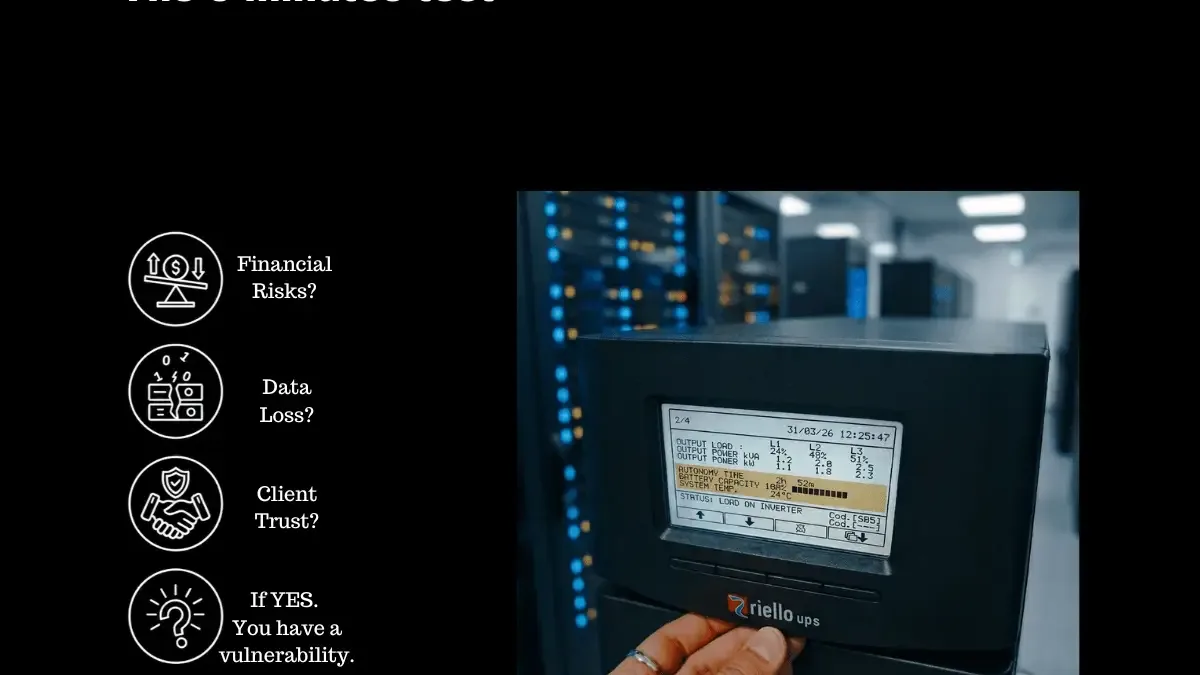
- The UPS: This is your first line of defense. A low-end UPS doesn’t just fail; it can fail violently, dropping the load and causing immediate data loss or hardware damage. High-quality systems guarantee clean, uninterrupted transfer.
- The Batteries: Batteries are the most vulnerable part of any backup system. Cheap, untested batteries degrade much faster and often fail without warning precisely when the UPS asks them to take the load.
- The Diesel Generator: Your generator is your long-term lifeline. A low-quality engine or alternator might save you 15% upfront, but when it fails to start during a blackout, the resulting downtime will cost you far more than the initial “savings.”
A maintenance contract is not an optional extra on this equipment. Talk to us about a scheduled maintenance plan.
The Maintenance Trap
Buying tier-one, high-quality equipment is only half the battle. The other half is maintenance.
I have seen multi-million-dollar facilities brought to their knees because they invested heavily in premium generators and UPS systems, but refused to implement a proper, scheduled maintenance plan.
Batteries dry out. Filters clog. Firmware becomes outdated.
A critical system without a maintenance contract is a ticking clock. If a proper plan is not implemented or executed correctly by certified professionals, your premium equipment will eventually perform like low-end equipment.
The Bottom Line
When you invest in reliable power infrastructure from reputable brands and back it up with rigorous maintenance, you are not buying heavy machinery. You are buying operational certainty. You are buying time.
Never bargain on the equipment that keeps you in business
Frequently asked questions
Yes. A low-end UPS does not simply underperform — it can fail under load and drop the equipment it was bought to protect. The saving on the purchase price moves straight onto the emergency repair bill, so the cost shifts from CAPEX to OPEX rather than disappearing.
UPS systems, generators and battery banks. They act together as the facility’s backbone: the UPS covers the instant, the battery carries the gap, the generator sustains the outage. Weaken any one and the chain has a hole in it.
No. Buying tier-one hardware is only half the job. Batteries dry out, filters clog and firmware ages. A critical system without a maintenance contract is a liability waiting for the day it is needed.
The equipment price is the smallest line. The real cost is the downtime, the damaged load, the lost production or transactions, and the emergency call-out — none of which appear on the quotation you compared.
Related reading: The four operation modes of an online UPS and Summer Power Reliability in Amman.
No responses yet